Why Is Razor Wire the Most Effective Perimeter Security Solution?
Introduction
Modern security threats are becoming more frequent and complex, especially for industrial facilities, transportation hubs, and critical infrastructure. Traditional fencing systems such as chain link fence or welded mesh fence often fail to provide sufficient deterrence against forced intrusion. This is where razor wire becomes one of the most effective perimeter security solutions in the world.
Razor wire is designed to create a powerful physical and psychological barrier. Its sharp blade structure makes climbing, cutting, or crossing extremely dangerous, significantly reducing unauthorized access risks.
What Is Razor Wire
Razor wire, also known as concertina razor wire or barbed razor wire, is a high-security fencing material made from galvanized steel strip or stainless steel strip combined with high-tensile core wire.
The steel strip is machine-pressed into sharp blade shapes and tightly wrapped around the core wire to form spiral coils or linear barrier systems. This structure is designed to maximize deterrence and delay intrusion attempts.
Types of Razor Wire
Concertina Razor Wire
Concertina razor wire is formed into spiral coils that expand like a concertina. It is widely used in military bases, prisons, and border security projects.
Flat Razor Wire
Flat razor wire is installed in a flat configuration, usually mounted on walls or fences where space is limited but security is required.
Cross Razor Coil
Cross razor coil uses a double-coil structure to increase density and security level. It is commonly used in high-security facilities.
Materials of Razor Wire
Galvanized Steel
Galvanized razor wire provides good corrosion resistance and cost efficiency, making it suitable for general outdoor environments.
Stainless Steel
Stainless steel razor wire offers superior rust resistance and long service life, especially for coastal and extreme environments.
Performance and Security Benefits
Razor wire provides extremely high security performance due to its sharp blade geometry and dense coil structure.
It acts as both a physical barrier and a psychological deterrent, significantly reducing intrusion attempts in sensitive areas.
It can also be integrated with fencing systems such as chain link fence or steel mesh panels to form a complete perimeter security solution.
How to Choose Razor Wire
Selecting the right razor wire depends on several key factors:
Security level: High-risk areas require concertina or cross coil systems.
Environment: Coastal areas should use stainless steel for corrosion resistance.
Installation method: Wall top, fence top, or ground barrier applications require different configurations.
Budget: Galvanized types are more economical than stainless steel.
Common Problems
Corrosion
In humid or coastal environments, poor coating quality may lead to rust over time.
Deformation
Improper handling or installation may cause coil deformation and reduce security performance.
Loose Installation
If not properly fixed, razor wire may lose tension and reduce deterrent effect.
Maintenance Tips
Although razor wire is low maintenance, periodic inspection is recommended:
- Check coating condition regularly
- Ensure coils remain tight and stable
- Inspect after extreme weather events
- Replace damaged sections when needed
Real Engineering Experience
Case 1: Industrial Plant Security Upgrade in Southeast Asia
Concertina razor wire was installed around factory perimeters to prevent unauthorized access and improve overall security.
Case 2: Border Protection System in Central Asia
Cross coil razor wire was deployed in remote border regions to create a strong physical barrier against intrusion.
Case 3: Warehouse Security Project in Middle East
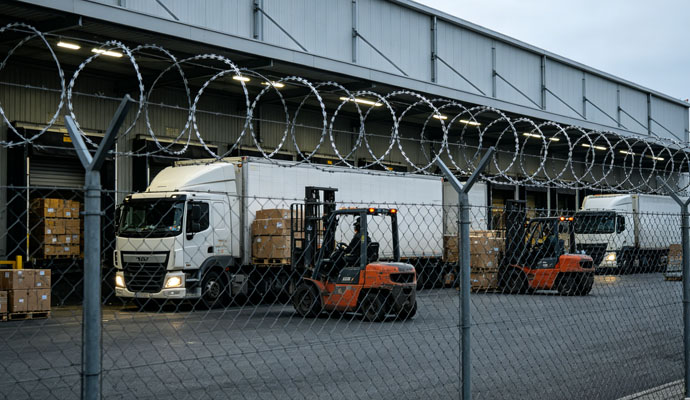
Flat razor wire was installed on top of perimeter walls to enhance protection for logistics facilities.
Conclusion
Razor wire remains one of the most reliable and effective perimeter security solutions. Its sharp blade design, strong deterrence effect, and flexible installation methods make it suitable for a wide range of high-security applications.
FAQ
What is razor wire used for
It is used for perimeter protection in prisons, military bases, factories, and critical infrastructure.
Is razor wire more effective than barbed wire
Yes, it provides significantly higher deterrence and physical protection.
What materials are used for razor wire
Galvanized steel and stainless steel are the most common materials.
Can razor wire be installed on existing fences
Yes, it is widely installed on walls and fence systems.
How long does razor wire last
Typically 10–20 years depending on material and environment.